Market statistics
- Total volume
- $2.3M
- 24h volume
- $234K
- Liquidity
- $2.4M
- Open interest
- $235K
- Comments
- 30
Available prediction outcomes (80)
Sorted by descending live probability. Click any outcome to trade it on PolyGram.
Market context
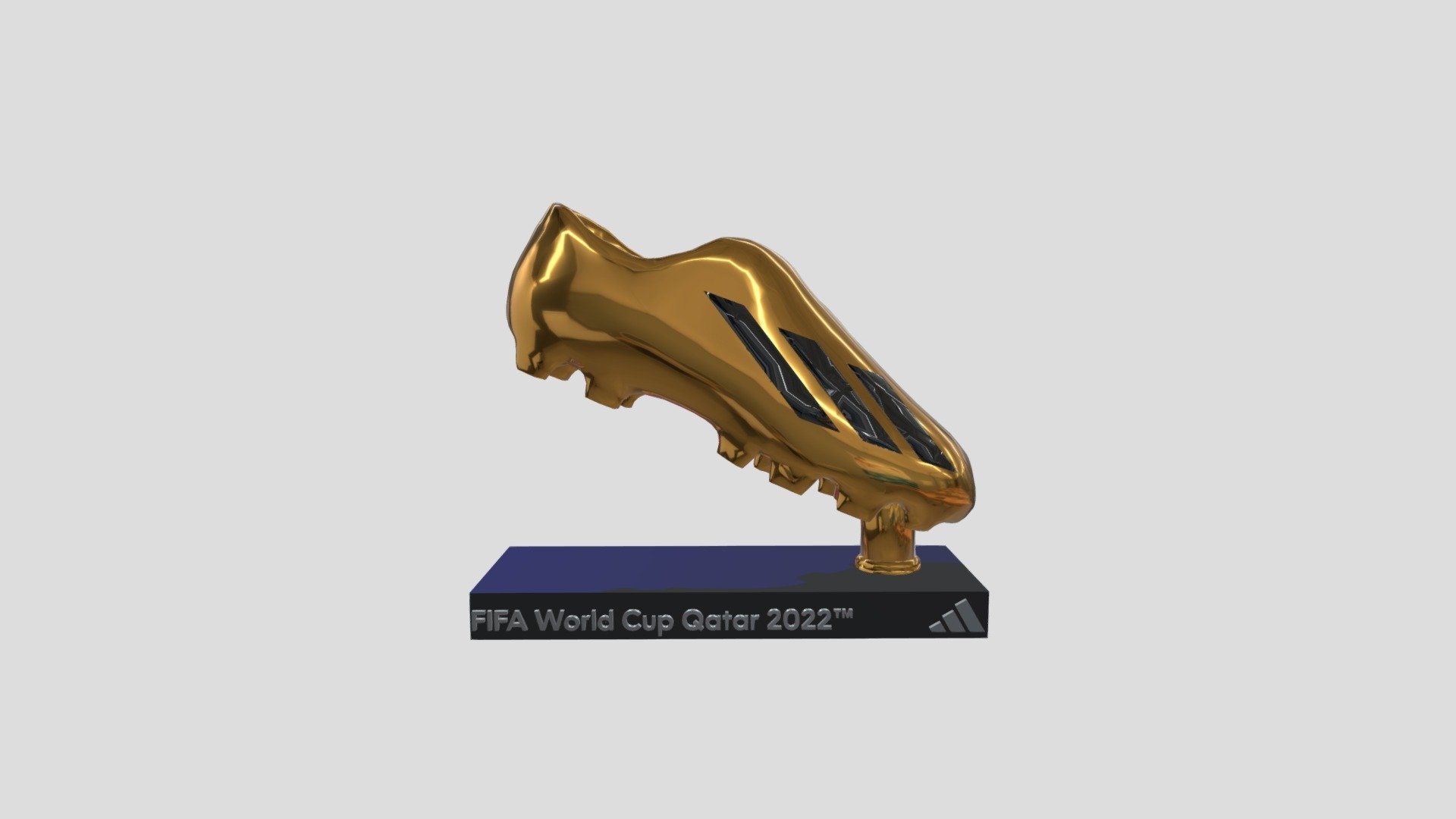
The 2026 FIFA World Cup will take place across the United States, Canada, and Mexico from June to July, with 48 teams competing in the expanded format. The Golden Boot—awarded to the tournament's leading goalscorer—represents one of football's most unpredictable individual honours, dependent on team progression, tactical deployment, and fixture scheduling across six weeks of competition. Polymarket currently prices this contract at 5% implied probability, reflecting the dispersed nature of the market where dozens of plausible candidates fragment the probability space across multiple positions.
Historical precedent suggests top-tier strikers from strong squads dominate the race. Harry Kane won in 2018 with six goals; Cristiano Ronaldo and Gerd Müller each scored eight in their respective tournaments. However, the outcome hinges substantially on which nations advance deepest: a prolific forward from an early-exit team will accumulate fewer opportunities than a less clinical striker whose side reaches the final. The 2022 World Cup saw Kylian Mbappé claim the award with eight goals despite France's runner-up finish, demonstrating that individual brilliance can override squad depth expectations.
Traders should monitor squad announcements and manager selections from autumn 2025 onwards, as tactical formations and striker rotation policies will clarify which players receive consistent minutes. The expanded 48-team format creates additional group-stage matches, potentially inflating goal tallies across the board. Injury updates in the months preceding June 2026 will prove critical, particularly for ageing strikers like Mbappé or emerging talents whose form trajectory remains uncertain. FIFA's official statistics and real-time goal tallies during the tournament will determine settlement against the conditional token mechanics on Polygon.
Wikipedia Context
-
 World cup
A world cup is a global sporting competition in which the participant entities – usually international teams or individuals representing their countries – compete for the title of world champion. The event most associated with the name is the FIFA World Cup for association football, which dates back to 1930. Since then there have been a number of sporting ev
-
2016 World Cup of Hockey
The 2016 World Cup of Hockey was an international ice hockey tournament. It was the third installment of the National Hockey League (NHL)-sanctioned competition, 12 years after the second World Cup of Hockey in 2004. It was held from September 17 to September 29 at Air Canada Centre in Toronto, Ontario. Canada won the championship, defeating Team Europe in t
-
1996 World Cup of Hockey
The first World Cup of Hockey (WCH), or the 1996 World Cup of Hockey, was the inaugural edition of the event, replacing the Canada Cup as one of the world championships of ice hockey.
-
2028 World Cup of Hockey
The 2028 World Cup of Hockey will be the fourth installment of the World Cup of Hockey by the National Hockey League. It will be played in February 2028 with 17 games in three host cities. The competition will include eight teams from individual countries in North America and Europe.
Methodology
This page reviews World Cup: Golden Boot Winner across five venues. The live probability is the Polymarket mid-price, sourced directly from the on-chain Polygon order book; the comparison columns benchmark each venue on fee structure, KYC, settlement currency and payment rails. Every CTA routes to PolyGram, which mirrors the Polymarket order book at 0% fees.
Resolution & payout
Polymarket-based markets settle through the UMA Optimistic Oracle on Polygon. A proposer submits the outcome, a two-hour challenge window opens, and unchallenged proposals finalise the resolution. Payouts settle automatically in USDC the moment the result is final — no bookmaker, no delay.
Kalshi-based markets settle in USD via the CFTC-regulated clearinghouse. Betfair Exchange settles in GBP/EUR net of commission. Manifold is play-money and does not pay out real funds.
FAQ
- Is this market available outside the US?
- Polymarket itself is geo-blocked in the US/UK/EU. Always check the legal status of prediction markets in your jurisdiction before trading.
- What's the difference between YES and NO shares?
- A YES share pays $1.00 if the event happens, $0 otherwise. A NO share pays $1.00 if the event doesn't happen. The market price between 0¢ and 100¢ is the implied probability.
- What does Polymarket cost to trade?
- Polymarket itself charges 0% — the only cost is the Polygon network fee, typically under $0.01 per transaction. Off-chain venues like Kalshi or Betfair charge 2-7% commission.
- How fast are USDC deposits?
- Polygon credits deposits after 12 confirmations — usually under 30 seconds. Withdrawals follow the same path and land back in your wallet within minutes.
- How reliable are the quoted odds?
- The YES/NO percentages are the live mid-prices of the Polymarket order book. On deep markets they move every few seconds; on thinner ones you'll see short plateaus.
Trade World Cup: Golden Boot Winner on PolyGram
Live order book, 0% fees, USDC settlement in seconds.
Open live market →